Executive Succession Planning for Small- to Mid-sized Companies in Texas
CEO Succession Planning for Growing Businesses in Texas
Succession planning protects leadership continuity and enterprise value, but many organizations start too late. It should begin 2–10 years before a planned transition to reduce risk and avoid leadership gaps.
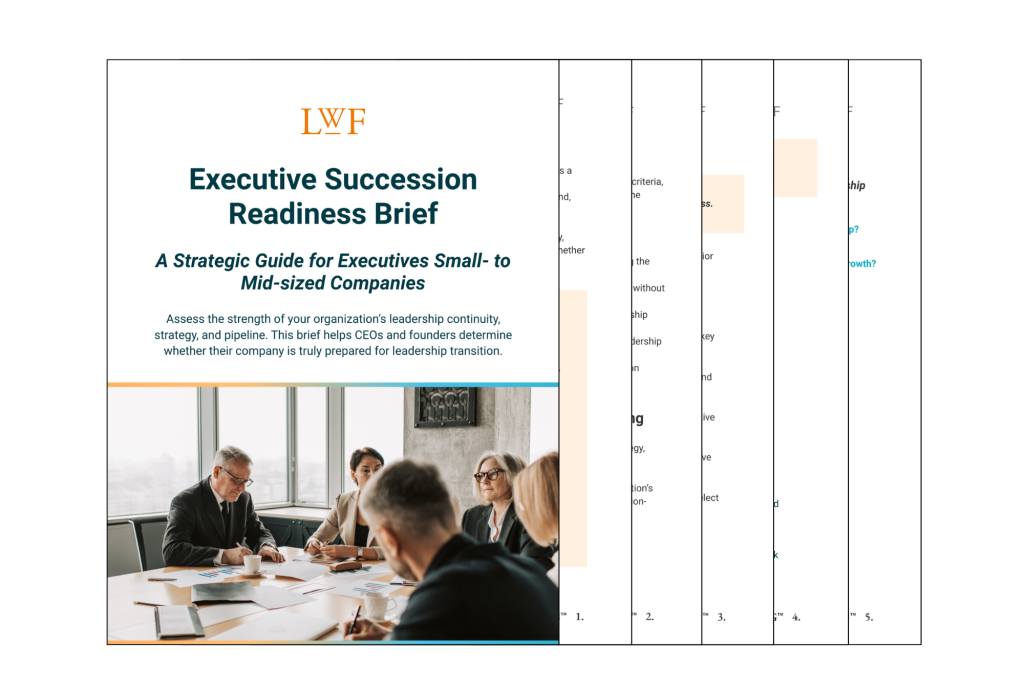
Leadership Worth Following helps small- to mid-sized organizations in Texas build structured succession plans. Schedule a consultation or download our Executive Succession Readiness Brief to evaluate your leadership pipeline and readiness.
CEO Succession Planning FAQs
CEO succession planning is designed for leaders responsible for the long-term stability and growth of an organization.
This typically includes:
• CEOs and Founders planning for long-term leadership continuity
• Presidents or Managing Partners preparing the next generation of leadership
• Executive Leadership Teams responsible for leadership development and transition planning
• Boards and Investors focused on protecting enterprise value
Organizations that benefit most from succession planning for small businesses and mid-sized companies typically have 50–500 employees and $10M+ in revenue and are experiencing growth.
Most organizations should begin CEO succession planning 2 to 10 years before a planned leadership transition. Starting early allows organizations to develop internal leaders, align executive expectations, and avoid rushed decisions that can disrupt operations or reduce enterprise value.
Companies often benefit from succession planning when:
• The CEO or founder is central to key decisions
• The company is scaling quickly
• Investors or boards are asking about leadership continuity
• Internal leadership pipelines are unclear
As companies scale, leadership requirements evolve. What drives success at $25M is rarely what sustains growth to $50M and beyond. Defining the leadership capabilities needed at each stage is a critical component of effective CEO succession planning.
Succession planning helps businesses:
• Maintain leadership continuity
• Develop future executive leaders
• Reduce founder or CEO dependency
• Protect long-term enterprise value
For scaling organizations, succession planning ensures the business can continue to grow even as leadership evolves.
A structured process typically includes:
• Leadership risk and role analysis
• Executive team alignment discussions
• Assessment of internal leadership candidates or consider need for external candidates
• Development plans for potential successors
• A clear transition strategy
The goal is to ensure the organization is prepared for leadership change long before it becomes urgent.
Yes. As companies scale, leadership expectations increase. Many organizations begin succession planning to ensure executive alignment, prepare future leaders, and protect enterprise value during growth.
The Leadership Risk Growing Companies Often Ignore
As organizations scale, leadership complexity increases. Decision-making becomes more distributed, executive teams grow, and investor and board expectations rise. Yet many companies still operate without a structured leadership transition strategy.
Without CEO succession planning, companies often experience:
- Founder or CEO dependency
- Leadership pipeline gaps
- Executive misalignment
- Board or investor pressure regarding leadership continuity
- Enterprise value exposure during leadership transitions
Organizations that prioritize succession planning for small businesses and scaling companies are better positioned to sustain growth and leadership stability.
Why Informal Succession Planning Fails
Many organizations assume succession will naturally resolve itself.
Common assumptions include:
- An internal successor will eventually emerge
- Leadership transition can wait until retirement approaches
- Executive teams will align when the time comes
- Informal mentorship is enough to prepare future leaders
- High-performing leaders are assumed to want the next role
In reality, leadership transitions without structure often lead to disruption. Effective CEO succession planning requires a deliberate process that prepares organizations for leadership transitions before they become urgent.
What Strategic CEO Succession Planning Requires
High-performing organizations treat succession planning as a long-term leadership system.
A structured succession planning strategy for small businesses and scaling organizations typically includes:
Leadership Risk Assessment
Identifying critical leadership roles and potential vulnerabilities.
Executive Alignment
Ensuring leadership teams agree on future leadership expectations.
Leadership Capacity Evaluation
Objectively assessing potential internal successors.
Development Planning
Preparing emerging leaders for future executive responsibilities.
Transition Planning
Designing structured pathways for leadership change.
Organizations implementing these practices strengthen leadership continuity and protect organizational performance.
Succession Planning Dallas and Across Texas
Leadership Worth Following partners with organizations across Texas to proactively strengthen leadership continuity through CEO succession planning, executive development, and structured succession strategies for growing businesses.
Our clients include companies located in:
- Dallas
- Fort Worth
- Austin
- Houston
- San Antonio
- Plano
- Corpus Christi
Organizations across the state increasingly recognize that leadership continuity is critical for long-term growth and enterprise stability.

TAKE THE NEXT STEP
Schedule a Confidential Succession Consultation
If your organization is beginning to consider executive succession planning, a confidential consultation can be a helpful starting point.
During this quick conversation, we will discuss:
• Potential leadership continuity risks
• Executive alignment across your leadership team
• The strength of your internal leadership pipeline
• Practical options for succession planning in your organization
The purpose of this consultation is to provide clarity on where your organization currently stands and what steps may strengthen your succession strategy.
FREE DOWNLOAD
Download the Executive Succession Readiness Brief
Quickly evaluate your leadership pipeline and readiness for future transitions and receive actionable recommendations.
What’s inside the brief:
- 5 overlooked succession risks
- 3 components of strategic succession planning
- Executive succession readiness scorecard exercise
- Key succession questions every CEO should answer